“original leaf” search results (600)

Introduction to the flavor and taste of Arabica coffee manor in Indonesia
Varieties resistant to leaf rust found in Congo, Africa, teach Arabica species to be more resistant to the disease. People like to compare the robusta species to the Arabica species of coffee. In fact, the robusta species was originally a mutant of the Congolese species (scientific name Cofffea canephora), so it is the Congolese species that should be compared with the Arabica species. To this day, however, Robusta species
2016-07-20 Indonesia Rabbi Coffee Manor producing area Flavor taste introduction Africa
How many coffee producing countries are there in the world?
1. Arabica species (scientific name Coffea arabica) Arabica species is native to Ethiopia's Abyssinian plateau (now Ethiopia plateau), early mainly as a medicinal food (Islamic lovers used as a healing medicine or to wake up), 13th century developed the habit of baking and drinking, 16th century introduced to Europe via Arabia
2016-06-06 coffee cultivation condition world on how much country of production rabbi kasu scientific name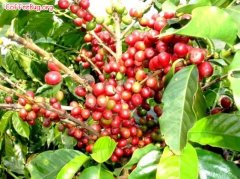
The basics of coffee beans the three native species of coffee
Coffee belongs to the evergreen shrub of the genus Rubiaceae, which is centered in the tropics. There are about 6000 species of Rubiaceae belonging to 500 genera. Coffee has always been thought to have certain effects, such as strengthening the stomach, waking up the brain, stopping bleeding, dissipating heat, strengthening the body, and so on. The more famous Rubiaceae plant is Gardenia jasminoides, whose fruit was dried and used as medicinal material a long time ago. The three native species of coffee
2015-01-26 Coffee beans basic knowledge coffee three native belong to grass family evergreen
Coffee taste?
Coffee tastes sweet. I met Yezi online, even though we were already in the same school, my freshman year and her senior year. I remember the time I entered the chat room, my name was Hate Coffee, and she was COFFEE. First she said to me,"Why do you hate coffee?" Is it bad? No, I don't like the taste of coffee. It's bitter. hey, why are you sighing? You haven't tasted coffee.
2014-05-14 Coffee Life Health Coffee Machine Coffee Powder
Indonesia GEE Mantenin Coffee processing Plant Price characteristics Flavor description method taste introduction
Manning coffee beans the prosperity of Indonesian coffee was not sustainable, coffee production was fatally hit at the end of the 18th century, and leaf rust, originally found in West Java, spread rapidly, destroying Indonesia's Arabica coffee estate. The leading position of the coffee trade was replaced by the American producing countries. However, it is worth mentioning that the leaf rust disaster did not affect the eastern Indonesian producing areas, namely, Flores Island and
2016-10-19 Indonesia GEE Mante coffee processing plant price characteristics flavor description location
The basic knowledge of Coffee beans Coffee beans are the three native species of coffee
Coffee belongs to the evergreen shrub of the genus Rubiaceae, which is centered in the tropics. There are about 6000 species of Rubiaceae belonging to 500 genera. Coffee has always been thought to have certain effects, such as strengthening the stomach, waking up the brain, stopping bleeding, dissipating heat, strengthening the body, and so on. The more famous Rubiaceae plant is Gardenia jasminoides, whose fruit was dried and used as medicinal material a long time ago. The three native species of coffee
2015-04-13 Coffee beans basic knowledge coffee three native belong to grass family evergreen
Introduction to the quality and Flavor description of Arabica Coffee varieties
Bourbon coffee features iron pickup "Typica" iron pickup, the name sounds majestic, but in fact it is not so strong. It has a weak physique, poor disease resistance, easy to catch rust leaf disease and produces less fruit. It is one of the oldest native varieties in Ethiopia, and many Arabica are derived from iron pickups! The bronze color of the top leaf of the iron pickup is one of the characteristics, and the bean grain is large and pointed.
2016-10-19 Rabbi coffee variety quality flavor description treatment taste grinding introduction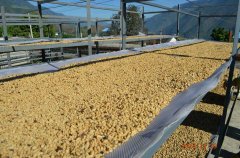
Coffee three native species Arabica species: Ethiopia 90+levelup Flower language Sunlight Sidama
Coffee belongs to Rubiaceae coffee evergreen shrubs, tropical regions as the center, about 500 genera 6000 species of Rubiaceae plants distributed in this. Coffee has long been considered to have certain medicinal effects, such as stomach, mind, hemostasis, heat dissipation, physical strength and so on. There are about 40 species of plants in the genus Coffea, but only Arabica, Robusta and Libby can produce coffee beans with commercial value.
2016-04-05 coffee three major native species a rabbi kaspecies ethiopia 90 +lev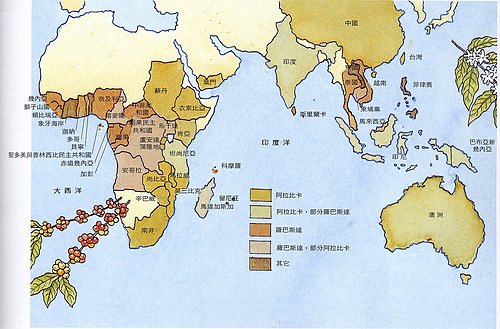
The basic knowledge of Coffee beans the three native species of coffee Robsta species Arabica species Libby
Basic knowledge of coffee beans (1) Coffee belongs to the evergreen shrub of the genus Rubiaceae, which is centered in the tropics. There are about 6000 species of Rubiaceae belonging to 500 genera. Coffee has always been thought to have certain effects, such as strengthening the stomach, waking up the brain, stopping bleeding, dissipating heat, strengthening the body, and so on. The more famous Rubiaceae plant is Gardenia jasminoides, whose fruit was dried and used as medicine a long time ago.
2016-03-17 Coffee beans Basics Coffee Native Robes Booth Rabbi Card seed Libby
Introduction to the varieties and characteristics of Coffee beans
Typica, also known as Tippica, is the closest to the native species of Arabica, where almost all Arabica varieties originated. It was widely cultivated in Central and South America in the past, with long beans and excellent aroma and sour taste, but it is not resistant to leaf rust and requires a considerable number of shading trees, resulting in low production (same as bourbon, every two).
2016-06-05 Coffee beans varieties and their characteristics introduction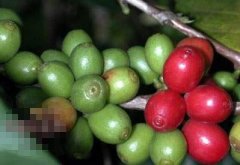
Three native species of coffee
There are about 40 species of coffee, but only one of them can produce coffee beans of commercial value. Arabica, Robusta and Liberia are called the "three native species of coffee".
2014-06-09 Coffee knowledge coffee varieties coffee encyclopedia
The taste of coffee, the story of coffee, the amorous feelings of coffee meet coffee.
Coffee is supposed to be sweet. I met Ye online, although we were in the same school at that time. I was a freshman and she was a senior. I remember the time I went into the chat room, my name was hate coffee, and she was COFFEE. First of all, she told me why you hate coffee. Isn't it good? No, I don't like the taste of coffee. It's bitter. Hey, why are you sighing? You didn't taste the coffee.
2016-02-29 Coffee taste story amorous feelings encounter
The three primary species of Ethiopian coffee
About 65% of coffee circulating in the world market is Arabica: according to ICO (International Coffee Organization) statistics, excluding the domestic transactions of coffee producing countries, about 65% of coffee circulating in the world market is Arabica and 35% is Robusta. Arabica is characterized by elongated and flattened particles, and Robusta coffee beans are rounded. But if you add a
2016-09-20 Ethiopia Coffee Big Three Origin Region Flavor Taste Introduction
Flavor and taste of coffee manor in Indonesia Kahayang Gan Manor
The classification will be more complicated. Some Arabica coffee beans are quite close to the native species, while others are quite similar to the Robusta species. Even if the coffee has the same name (named from the place of origin), as long as the cultivated varieties are different, the flavor is different from the leaf rust-resistant varieties found in the African Congo, teaching the Arabica species to be more resistant to the disease. People like to plant Robusta
2016-07-22 Indonesia Coffee Manor producing area Flavor Taste introduction Kaha Yanggan
Introduction to the flavor and taste characteristics of Arabica coffee manor in Indonesia
West Africa, the origin of coffee grown in Liberia, has a strong adaptability to all kinds of environments, such as high or low temperature, humidity or dryness, except that it is not resistant to leaf rust and its flavor is worse than that of Arabica, so it is only traded or planted in some West African countries (Libya, C ô te d'Ivoire, etc.). Among the coffee in circulation in the world market, about
2016-07-13 Indonesia Rabbi Coffee Manor producing area Flavor palate characteristics introduction
Coffee basic knowledge three native species of coffee
There are about 40 species of coffee plants, but only one can produce coffee beans of commercial value. Arabica, Robusta and Liberia are known as the three major native species of coffee: Arabica species are native to the Ethiopian plateau. Arabica coffee accounts for 75%, 80% of all coffee varieties, and its excellent flavor and aroma make it these.
2015-04-22 Coffee basics common sense three original
Colombian coffee bean Arabica seed Dikapunkadullah Mondo Dono Wokadu Amarago
Arabica coffee is generally considered to be originated from the Ethiopian plateau, widely distributed in the tropics, after repeated mutation and breeding, derived a lot of varieties. Tibica: this is the closest Arabica species to the native species. Almost all Arabica varieties are derived from this. It is long in bean shape, has excellent aroma and sour taste, but is not resistant to leaf rust.
2016-03-29 Colombia coffee beans rabbi card species Tibby Cabo Panca Dula Dono
Boutique Coffee explains in detail the three native species of coffee
There are about 40 species of coffee plants, but only one can produce coffee beans of commercial value. Arabica, Robusta and Liberia are known as the three major native species of coffee: Arabica species are native to the Ethiopian plateau. Arabica coffee accounts for 75%, 80% of all coffee varieties, and its excellent flavor and aroma make it these.
2014-11-08 Coffee knowledge boutique coffee science coffee varieties
Origin Culture and species Morphology of Colombian Coffee
The earliest records of coffee cultivation in Colombia appear in a book called The Illustrated Orinoca by Spanish missionary Jose Gumilla. He describes what he saw when he preached on both sides of the Meta River in 1730, in which he mentioned the local coffee plantation. By 1787, other missionaries had spread coffee to other parts of Colombia.
2016-06-08 Colombia Coffee Origin Culture species form about
The basic knowledge of coffee beans the origin of coffee coffee practice
The origin of Arabica species is the Abyssinia Plateau of Ethiopia (now the Ethiopian Plateau). In the early days, it was mainly eaten as medicine (Islamic couples used it as a secret medicine to cure body and mind or to awaken the brain). It developed the habit of baking and drinking in the 13th century and was introduced into Europe through the Arab region in the 16th century. It has become a favorite drink all over the world.
2016-05-27 Coffee beans basic knowledge coffee origin practice rabbi species Ethiopia